Faster, more reliable claims intake from email and PEC for an Italian insurer
The challenge: manual intake slowing down the entire claims process
At an Italian insurer, the first step of the claims process - handling incoming communications - was heavily manual.
Claims arrived through email and PEC, often with multiple attachments such as CAI forms, images, and other supporting documents. Each case had to be reviewed individually:
- Emails opened and read
- Attachments checked and interpreted
- Relevant data identified and entered into systems
- Documents routed and stored manually
This created a bottleneck at the very beginning of the claims lifecycle. As volumes increased, the impact became more visible:
- Slower response times to incoming claims
- High dependency on manual work
- Limited ability to scale without adding resources
- Risk of inconsistencies when handling complex or incomplete information

The approach: bringing structure to inbound claims handling
KAPTO AI was introduced to handle incoming claims communications as part of a single, consistent process.
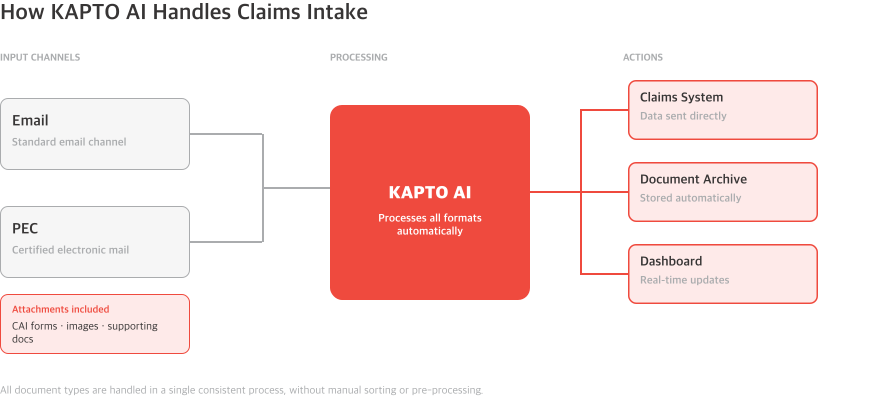
The system processes both PEC and standard email channels, including all attachments:
- CAI forms
- Images
- Supporting claim documentation
For each incoming case, KAPTO:
- Identifies and extracts the relevant claim data
- Structures the information for further processing
- Sends data directly to the claims system
- Stores documents in the archive
- Updates operational dashboards with real-time information
Different formats and document types are handled within the same flow, without requiring manual sorting or pre-processing.
The results
Claims intake is now handled faster and with greater consistency across cases:
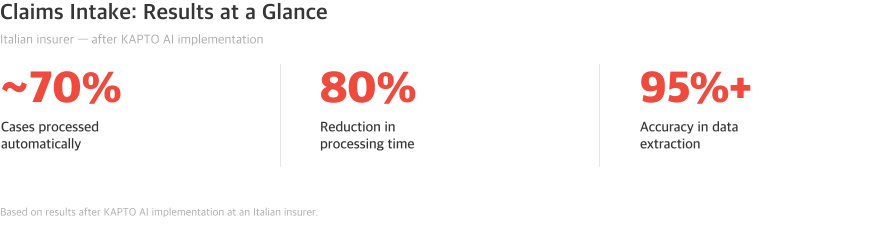
- Around 70% of cases processed automatically
- 80% reduction in processing time
- Over 95% accuracy in data extraction and handling
Manual effort has been reduced significantly, with teams focusing only on cases that require review or exception handling.
Business impact
The improvements at intake level affect the entire claims process:
- Faster initial response and handling of incoming claims
- More consistent data entering the claims system
- Better visibility through structured and trackable workflows
- Increased capacity without expanding the team
- Reduced operational and compliance risk through more reliable and auditable data handling
This Italian insurer now manages incoming claims communication in a more controlled and scalable way, even as volumes fluctuate.